
Techno Labo – Providing the world's most affordable quick plastic molds
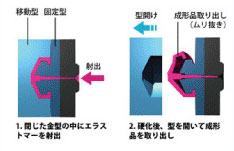 Elastomer products can be mass-produced by injection molding into a metal mold, just like general plastics.
As molding materials, we use thermoplastic elastomers (TPE) which soften when heated and harden upon cooling. Because elastomers remain soft after solidifying, parts with slight undercuts can often be demolded without damage.
For prototyping, a common approach is to cast a reactive (thermoset) elastomer—a liquid material that cures by mixing a base with a hardener—into a silicone rubber mold.
Small-lot phase
For small-lot runs, we produce with quick (simplified) molds using thermoplastic elastomers.
In some cases, we also leverage the unique properties of butadiene or isoprene to manufacture vibration-damping or shock-absorbing parts in limited quantities.
For these, we prepare casting fixtures/cases and pour the material to produce sample lots.
Mass-production phase
For high volumes, we build steel production molds and mold with thermoplastic elastomers. Since manufacturing near the consumption market is the rule of thumb, overseas production has increased in recent years, and we receive fewer such requests domestically.
What is an elastomer?
An elastomer is a soft polymer with rubber-like elasticity. In general, the term refers to thermoplastic grades that can be injection molded, and in some contexts, to materials molded without vulcanization like rubber. By adjusting the formulation, you can tune softness, elasticity, and other properties—hence their growing use in many fields. Typically, elastomers consist of a hard segment and a soft segment; their balance determines the overall properties.
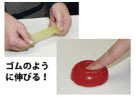
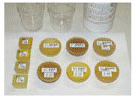
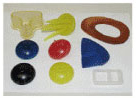
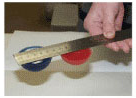
・Parts requiring flexibility
・Areas that contact human skin
・Snap-fits and compliant mating features
・Components needing impact absorption
・Recyclable (for thermoplastic types)
・No vulcanization step; simpler compounding
・Easy to color; transparency is achievable
・Can be overmolded or bonded with other materials
Types
| Thermoplastic Grades | ||
|---|---|---|
| Styrenic | Olefinic | Polyester-based |
|
Widely adopted and relatively low cost among elastomers. Light, flexible, and with good elongation. Depending on the soft segment, you’ll see SBS, SEBS, SIS, SEPS, etc. Often used to modify PP (polypropylene). Representative brands: SEPTON (Kuraray) Rabalon (Mitsubishi Chemical) |
Similarly widespread, akin to styrenics in popularity. Includes cross-linked grades (TPV) known for heat resistance—though TPV grades are not inexpensive. With PP as the hard segment, blends well with PP for recycling. Lightweight material. Representative brands: Thermorun (Mitsubishi Chemical) Milastomer (Mitsui Chemicals) |
High heat resistance; resists embrittlement under repeated bending and at low temperature. Both hard and soft segments are polyester. Used in automotive boots and ski boots; materials are relatively expensive. Representative brands: Hytrel (Toray) Pelprene (Toyobo) |
| Rigid PVC-based | Urethane-based | Amide-based |
| A legacy material with excellent weatherability and the lowest cost. The soft segment is a plasticizer/oil; hardness is easily tuned by dosage. Although sometimes avoided due to “de-PVC” trends, demand remains significant. |
One of the oldest elastomer families. Offers good abrasion resistance and rubber-like elasticity, but materials are relatively expensive. Used for shoe soles and belts. Polyurethane + polyester systems. Representative brands: Miractran (Nippon Polyurethane) |
Soft yet highly resistant to flexural fatigue. Good oil resistance and chemical resistance, but materials are very expensive. Hard segment typically Nylon 12. Representative brands: Polyamide Elastomer (Ube Industries) |
| Thermoplastic Grades |
|---|
| Styrenic |
|
Widely adopted and relatively low cost among elastomers. Light, flexible, and with good elongation. Variants include SBS, SEBS, SIS, SEPS. Often used to modify PP (polypropylene). Representative brands: SEPTON (Kuraray) Rabalon (Mitsubishi Chemical) |
| Olefinic |
|
Popular like styrenics. TPV (cross-linked) grades are known for heat resistance (but not cheap). With PP hard segments, blends well with PP for recyclability. Lightweight. Representative brands: Thermorun (Mitsubishi Chemical) Milastomer (Mitsui Chemicals) |
| Polyester-based |
|
High heat resistance; resists low-temperature embrittlement and repeated bending. Both segments are polyester. Used in auto boots and ski boots; relatively expensive. Representative brands: Hytrel (Toray) Pelprene (Toyobo) |
| Rigid PVC-based |
| Legacy material with excellent weatherability and very low cost. Soft segment is a plasticizer/oil; hardness is easily tuned. Despite “de-PVC” trends, demand remains. |
| Urethane-based |
|
Very mature elastomer family. Good abrasion resistance and rubber elasticity; materials relatively expensive. Used for shoe soles and belts (polyurethane + polyester). Representative brands: Miractran (Nippon Polyurethane) |
| Amide-based |
|
Soft yet strong against repeated flexing. Good oil and chemical resistance; materials are very expensive. Hard segment typically Nylon 12. Representative brands: Polyamide Elastomer (Ube Industries) |
| Thermoset / Reactive Grades | ||
|---|---|---|
| Butadiene / Isoprene-based | Urethane-based | |
| Systems where butadiene or isoprene—often used as soft segments in styrenic elastomers—are cured. Mixed when used; properties vary widely with formulation. Enables low-hardness materials with relatively high tear strength. | Soft aliphatic urethane systems mixed and cured on demand. Like the above, properties can be tuned freely. With appropriate selection, extremely soft grades are achievable. | |
| Thermoset / Reactive Grades |
|---|
| Butadiene / Isoprene-based |
| Cured systems derived from butadiene or isoprene soft segments. Mixed when used; properties vary widely with formulation. Allows low-hardness materials with comparatively high tear strength. |
| Urethane-based |
| Soft aliphatic urethane systems compounded and cured on demand. Properties are freely tunable; extremely soft grades are possible by material choice. |